Month for Loki: Nine

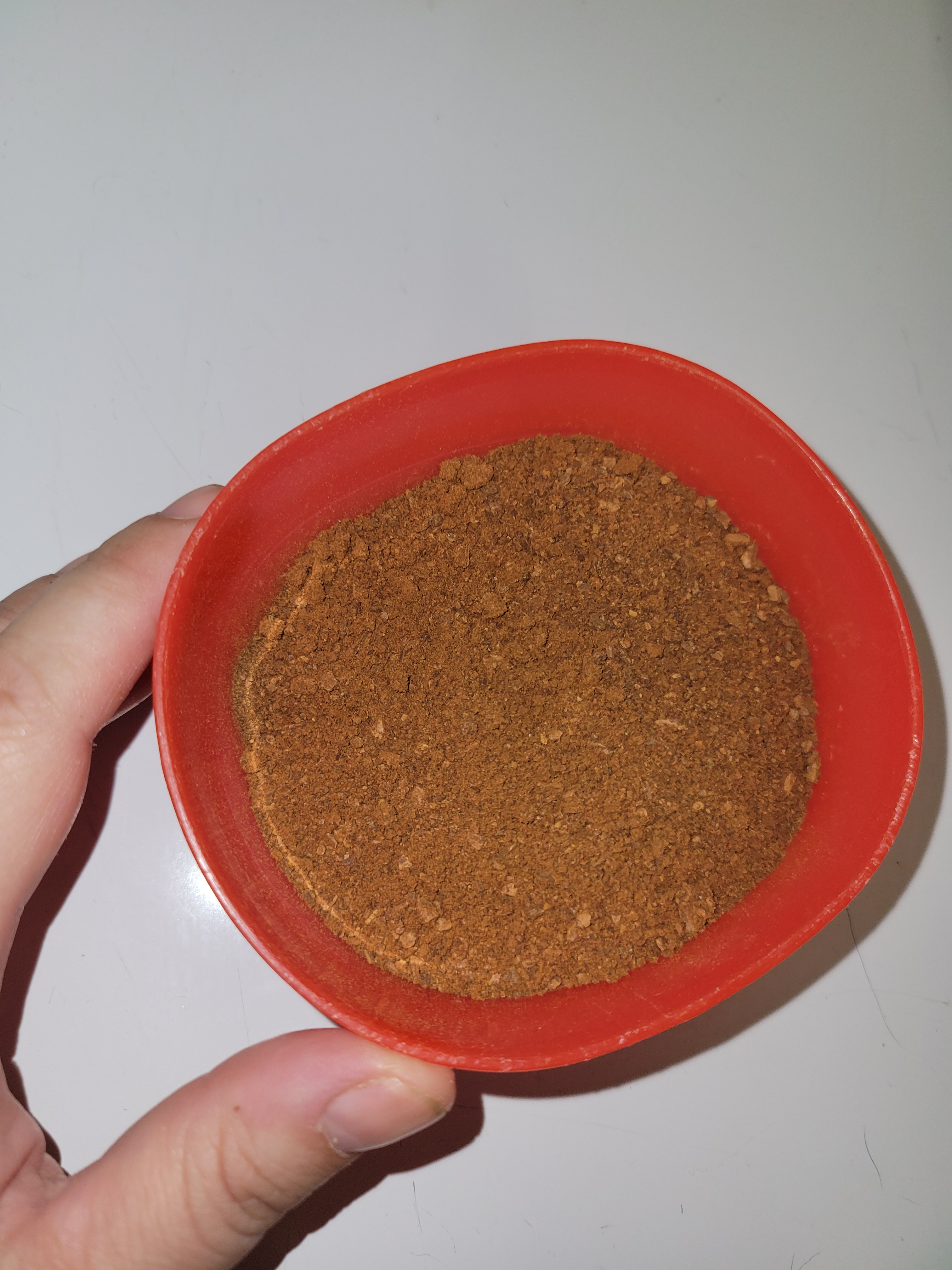
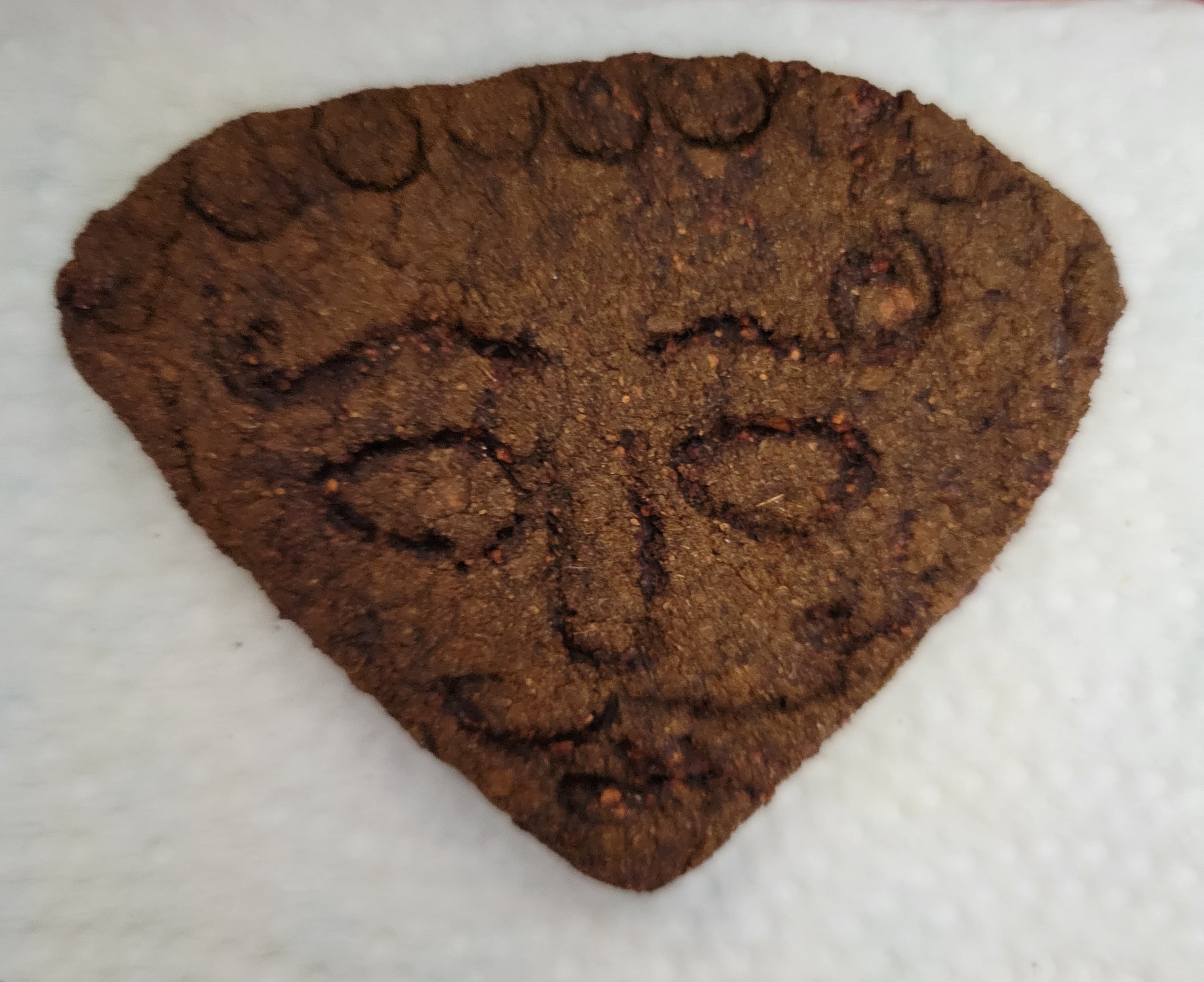
This cinnamon craft clay recipe makes a sweet-smelling dough that can be made into ornaments for your Loki altar.
Just mix together applesauce, cinnamon, and a bit of glue to create a clay that is perfect for rolling out and cutting shapes.
This recipe makes enough dough for about 10 ornaments, depending on the size. The shapes can be air-dried, or baked and then painted or left plain. If you make the clay ahead of time, store it in a covered container or a plastic bag at room temperature.
Cinnamon craft clay


I was having a moment recently, and I came across this quote from LokeanWitchoftheWest, and damn if its obvious truth didn’t slap me upside the head:
“A lot of Loki’s most suggested offerings are drugs (alcohol and tobacco especially). If you are someone who struggles with addiction, or addiction runs in your family, and you choose not to do drugs for any reason; Loki does not mind you not giving those types of offerings. You are not lesser to him, or to this community.”
Do you believe that Loki and Lóðurr from the creation myth are the same god? Why or why not?
Yes, I do believe that Loki, Loptr, and Lóðurr could be references to the same — if not different faces/aspects of the same deity.
(a) There’s the theory proposed by the scholar Ursula Dronke that Lóðurr is “a third name of Loki/Loptr”. Her argument rests upon the mention of Odin, Hœnir, and Loki as a trio of Norse deities/beings in a few late folkloric writings, including the Haustlöng, in the prologue to Reginsmál, and also in the Faroese ballad, Loka Táttur.
(b) As well, the kenning for Odin, Lóðurr’s friend appears to parallel another well-known kenning for Odin, Loptr’s friend – just as Loki is similarly referred to as Hœnir’s friend in the Haustlöng — which I believe further suggests their connection as a trio of deities/beings.
While many scholars may agree with this identification, I realize that it is not universally accepted. One argument that can be made against this argument is that Loki appears as a malevolent being later in Völuspá, which does seem to conflict with the image of Lóðurr as a “mighty and loving” figure.
Many scholars, including Jan de Vries and Georges Dumézil, have also identified Lóðurr as being the same deity as Loki.
(c) Scholar Haukur Þorgeirsson suggests that Loki and Lóðurr were different names for the same deity based on that Loki is referred to as Lóðurr in the rímur Lokrur.(1) Þorgeirsson argues that the writer of the rímur Lokrur may have had access to information about this identification from an earlier traditional extant tale or that perhaps the author had drawn that conclusion based on a possible comparative reference to the Prose Edda, as Snorri does not mention Lóðurr.
Since knowledge of the contents of the Poetic Edda could just as easily not have been accessible – or familiar – to every poet around 1400 AD when the rímur was written, still Þorgeirsson argues for the traditional identification, by pointing to Þrymlur where the same identification is made with Loki and Lóðurr. Again, Þorgeirsson mentions the possibility that the 14th- and 15th-century poets possessed written sources unknown to us, or the idea must have come from an unlikely source where the poets could have drawn a similar conclusion that Loki and Lóðurr are identical, but the sources of that (possibly oral) tradition remain presently unknown. He concludes that if Lóðurr was historically considered an independent deity from Loki, then a discussion of when and why Lóðurr became identified with Loki is an intriguing concept that deserves more exploration, and in his article (linked below), he discusses what he believes are several possibilities, based upon what is known about poetic and linguistic structures in the 14th and 15th century.
(d) Since the Prose Edda mentions the sons of Borr in the same context as Völuspá mentions Hœnir and Lóðurr, some scholars have reasoned that Lóðurr might be another name for either Vili or Vé. (Viktor Rydberg was an early proponent of this theory, even though it seems that he may have abandoned support of it later, as mentioned by Þorgeirsson in his article linked below .)
~~
(1) “Outside of the rímur, the name Lóðurr occurs in three Old Icelandic poems; Háleygjatal, Íslendingadrápa, and Völuspá. In each case, it indicates a figure associated with Óðinn, but scholars have been divided on exactly whom the name refers to. The theory which is most frequently defended – and most frequently attacked – is that the name refers to Loki.” from Haukur Þorgeirsson’s article, “Lokrur, Lóðurr, and Late Evidence” here (on Academia.com)
“Friend of Fire,
Bringer of Brightness,
You lead me through the dark,
a flickering flame from a distant candle.
When it goes out,
all feels abandoned,
my heart hurts,
but in the distance,
that flickering flame returns,
guiding me down a door I didn’t anticipate.
O’ Loki,
Blood-brother of Bǫlverkr,
I hail you for the lessons you’ve taught me,
and the warmth you’ve washed my woes away with.”
— hesy-bes
This is such a big deal.
Lokeans and other Rokkatru devotees have been waiting and campaigning for the Troth to change their stance regarding the worship of the Jotnar for a long time.
I am so glad to see that it is actually happening – that things are moving forward, as the Troth issued a new position statement recently:
Hail Fenrir: Celebrating the Troth’s New Position Statement
Hail Fenrir!
Loki has shown up several times in my life, and most often, it has been whenever I was struggling….
And this particular song resonates with me when I think about those times wherein I was struggling with my mental health:
“Jumper” lyrics
I wish you would step back from that ledge, my friend
You could cut ties with all the lies that you’ve been living in
And if you do not want to see me again
I would understand, I would understand
The angry boy, a bit too insane
Icing over a secret pain
You know you don’t belong
You’re the first to fight, you’re way too loud
You’re the flash of light on a burial shroud
I know something’s wrong
Well, everyone I know has got a reason
To say, “Put the past away”
I wish you would step back from that ledge, my friend
You could cut ties with all the lies that you’ve been living in
And if you do not want to see me again
I would understand, I would understand
Well he’s on the table and he’s gone to code
And I do not think anyone knows
What they are doing here
And your friends have left you, you’ve been dismissed
I never thought it would come to this
And I, I want you to know
Everyone’s got to face down the demons
Maybe today, you could put the past away
I wish you would step back from that ledge, my friend
You could cut ties with all the lies that you’ve been living in
And if you do not want to see me again
I would understand, I would understand
I would understand
I would understand
I would understand
I would understand
Can you put the past away?
I wish you would step back from that ledge, my friend
I would understand
I wish you would step back from that ledge, my friend
I would understand
I wish you would step back from that ledge, my friend
And I would understand
I wish you would step back from that ledge, my friend
I would understand
I wish you would step back from that ledge, my friend
And I would understand.
– Stephen Jenkins, Third Eye Blind
Welcome to July!
As some of you may or may not know, July is the month that many Lokeans dedicate specifically to Loki.
For this reason, every July, I like to spend a bit of time each day either writing, meditating, or engaging in some form of devotional activity, and then dedicating those efforts to Loki.
This year, I will be using some writing prompts developed by fellow Lokean, Dagny created for each day in July.
For the 1st of July: I first discovered Loki when…
As I may have written before, I don’t know exactly when I first ‘discovered’ Loki for myself. What I do know is that my love of reading fairy tales, folk tales, and world mythology probably led me to read about Him at some point.
Perhaps it began when I read about Loki in D’Aulaire’s Norse Gods and Giants:
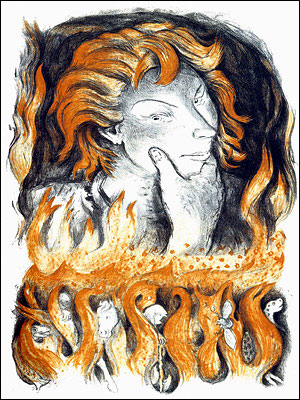
Or maybe my knowledge of His existence began even earlier than that when I discovered Him within the various stories found within The Children’s Library Collection, a 12-volume set of books that my father had read throughout his childhood in the 1940s.
I remember sitting in my grandfather’s leather easy chair, with this or that volume propped up on my lap, trying to work my way through a European folktale, and feeling delighted with the lively orange and black line illustrations of a clever fox who can run as fast as the wind if only one can hold unto his bushy tail with both hands, or that big helpful bear who carries a young girl on his back so that she may travel safely through a dark forest to reach the witch at the edge of the valley :
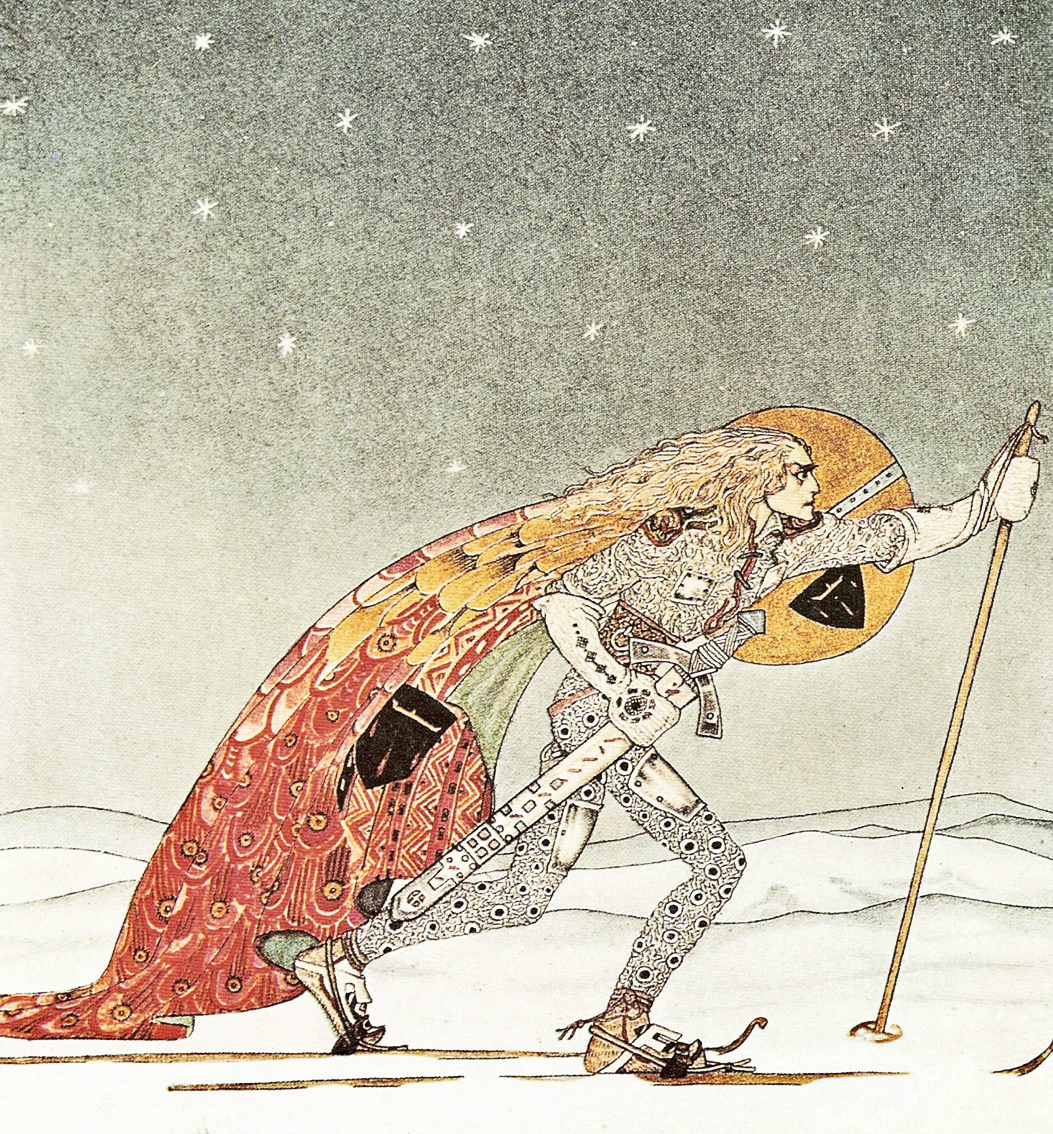
Either way, Loki became familiar to me as a short word that I was confident that I could read (and pronounce!) because it only had four letters — and I remember my Dad mentioning that the capital letter meant that it was a name.
 bloodteethandflame