bloodteethandflame

A life in threes

Category: Month for Loki

Month for Loki: Eight

This cinnamon craft clay recipe makes a sweet-smelling dough that can be made into ornaments for your Loki altar.

Just mix together applesauce, cinnamon, and a bit of glue to create a clay that is perfect for rolling out and cutting shapes.

This recipe makes enough dough for about 10 ornaments, depending on the size. The shapes can be air-dried, or baked and then painted or left plain. If you make the clay ahead of time, store it in a covered container or a plastic bag at room temperature.

Cinnamon craft clay

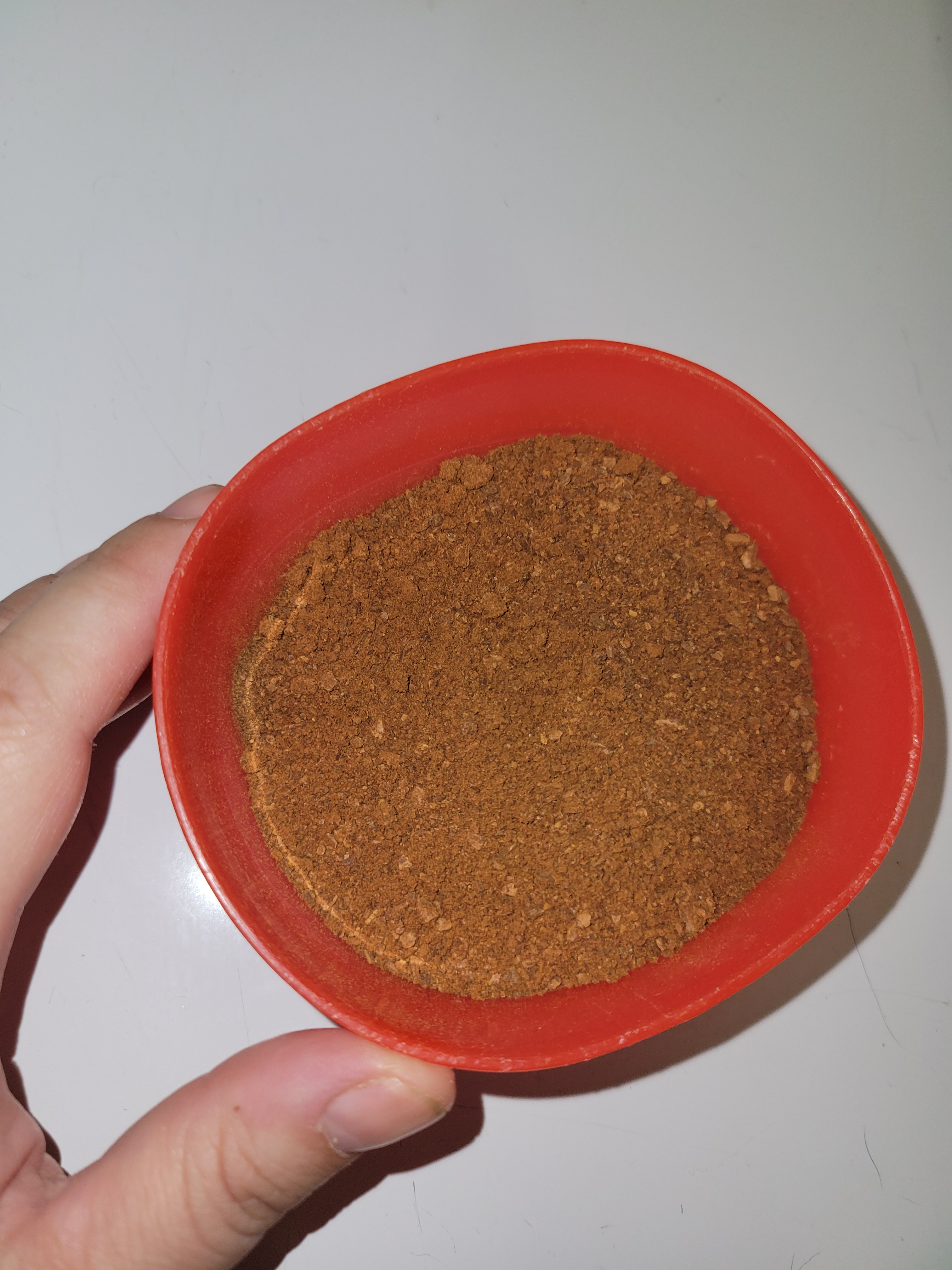
  • ¾ cup (85 grams) cinnamon (One can buy a 3-ounce jar from the dollar store):
  • ½ cup (130 grams) applesauce, unsweetened

  • 2½ tablespoons (40 ml) white glue (Elmer’s)

  • Cookie cutters
  • Mixing bowl and spoon
  • Wax paper
  • Rolling pin
  • Toothpick or straw
  • Cooling rack
  • Ribbon, twine, or yarn
  1. Combine the applesauce and white glue in a mixing bowl with a spoon. Slowly add the cinnamon, and mix until all the cinnamon is worked in and a dough forms. (The glue makes the dough easier to work, and increases the strength and durability of the finished items.)
  2. Remove the dough from the bowl and knead the mixture until it turns into a firm clay. Add more cinnamon if the dough is tacky, or more applesauce if it is crumbly.
  3. Let the dough sit for about 30 minutes in a covered bowl before using.
    To make ornaments: Roll out the dough between layers of wax paper to a thickness of 1/8″ to 1/4″. Use cookie cutters to cut out desired shapes. Use a toothpick or straw to cut out a hole near the top of the shape for a hanger. Let the shapes dry on wax paper or a wire rack for a couple of days; flip them a few times to promote even drying and avoid curling. When dry, paint the ornaments with puffy/dimensional paint, if you like, or leave them plain. Add a ribbon, twine, or yarn hanger.
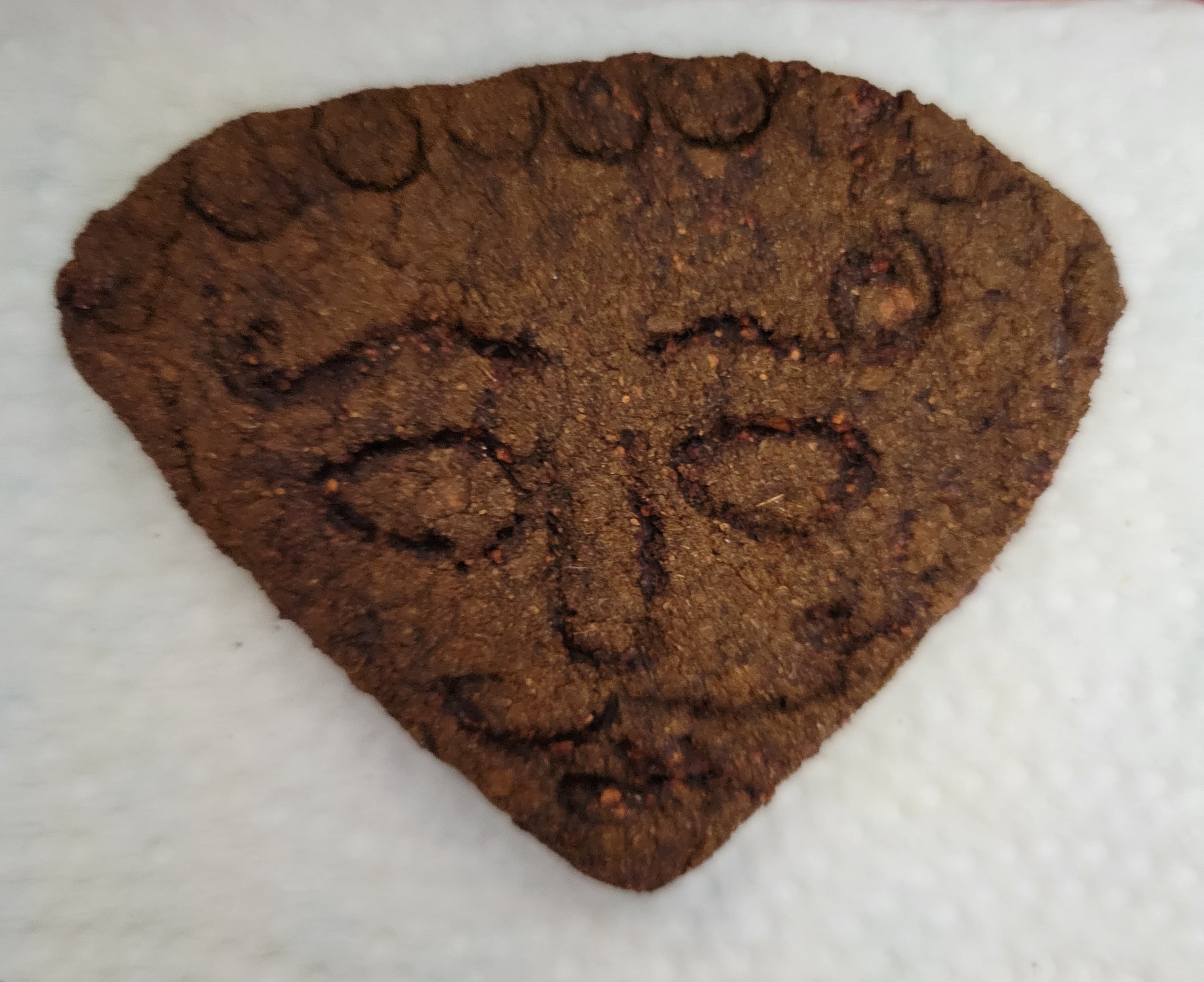
  4. Molded shapes: Pinch off as much dough as you need to make your shape, and leave the rest in the covered bowl. Work the dough into any desired shape with your hands. When you have finished molding your shape, put it on a piece of waxed paper to dry. It should dry in about two or three days to a hard finish.
Month for Loki: Seven

I was having a moment recently, and I came across this quote from LokeanWitchoftheWest, and damn if its obvious truth didn’t slap me upside the head:


“A lot of Loki’s most suggested offerings are drugs (alcohol and tobacco especially). If you are someone who struggles with addiction, or addiction runs in your family, and you choose not to do drugs for any reason; Loki does not mind you not giving those types of offerings. You are not lesser to him, or to this community.”

Month for Loki: Six

Do you believe that Loki and Lóðurr from the creation myth are the same god? Why or why not?

Yes, I do believe that Loki, Loptr, and Lóðurr could be references to the same — if not different faces/aspects of the same deity.

(a) There’s the theory proposed by the scholar Ursula Dronke that Lóðurr is “a third name of Loki/Loptr”. Her argument rests upon the mention of Odin, Hœnir, and Loki as a trio of Norse deities/beings in a few late folkloric writings, including the Haustlöng, in the prologue to Reginsmál, and also in the Faroese ballad, Loka Táttur.

(b) As well, the kenning for Odin, Lóðurr’s friend appears to parallel another well-known kenning for Odin, Loptr’s friend – just as Loki is similarly referred to as Hœnir’s friend in the Haustlöng — which I believe further suggests their connection as a trio of deities/beings.

While many scholars may agree with this identification, I realize that it is not universally accepted. One argument that can be made against this argument is that Loki appears as a malevolent being later in Völuspá, which does seem to conflict with the image of Lóðurr as a “mighty and loving” figure.

Many scholars, including Jan de Vries and Georges Dumézil, have also identified Lóðurr as being the same deity as Loki.

(c) Scholar Haukur Þorgeirsson suggests that Loki and Lóðurr were different names for the same deity based on that Loki is referred to as Lóðurr in the rímur Lokrur.(1) Þorgeirsson argues that the writer of the rímur Lokrur may have had access to information about this identification from an earlier traditional extant tale or that perhaps the author had drawn that conclusion based on a possible comparative reference to the Prose Edda, as Snorri does not mention Lóðurr.

Since knowledge of the contents of the Poetic Edda could just as easily not have been accessible – or familiar – to every poet around 1400 AD when the rímur was written, still Þorgeirsson argues for the traditional identification, by pointing to Þrymlur where the same identification is made with Loki and Lóðurr. Again, Þorgeirsson mentions the possibility that the 14th- and 15th-century poets possessed written sources unknown to us, or the idea must have come from an unlikely source where the poets could have drawn a similar conclusion that Loki and Lóðurr are identical, but the sources of that (possibly oral) tradition remain presently unknown. He concludes that if Lóðurr was historically considered an independent deity from Loki, then a discussion of when and why Lóðurr became identified with Loki is an intriguing concept that deserves more exploration, and in his article (linked below), he discusses what he believes are several possibilities, based upon what is known about poetic and linguistic structures in the 14th and 15th century.

(d) Since the Prose Edda mentions the sons of Borr in the same context as Völuspá mentions Hœnir and Lóðurr, some scholars have reasoned that Lóðurr might be another name for either Vili or Vé. (Viktor Rydberg was an early proponent of this theory, even though it seems that he may have abandoned support of it later, as mentioned by Þorgeirsson in his article linked below .)

~~

(1) “Outside of the rímur, the name Lóðurr occurs in three Old Icelandic poems; Háleygjatal, Íslendingadrápa, and Völuspá. In each case, it indicates a figure associated with Óðinn, but scholars have been divided on exactly whom the name refers to. The theory which is most frequently defended – and most frequently attacked – is that the name refers to Loki.” from Haukur Þorgeirsson’s article, “Lokrur, Lóðurr, and Late Evidencehere (on Academia.com)


Month for Loki: Four

Hail Lopt

Hail the Shepherd of Shimmering Heat on the Fields

Hail the Laughing and Jesting Son of Laufey

Hail to the Sly One

Bless and walk with us this day.

– Ladybrythwensinclair on Tumblr

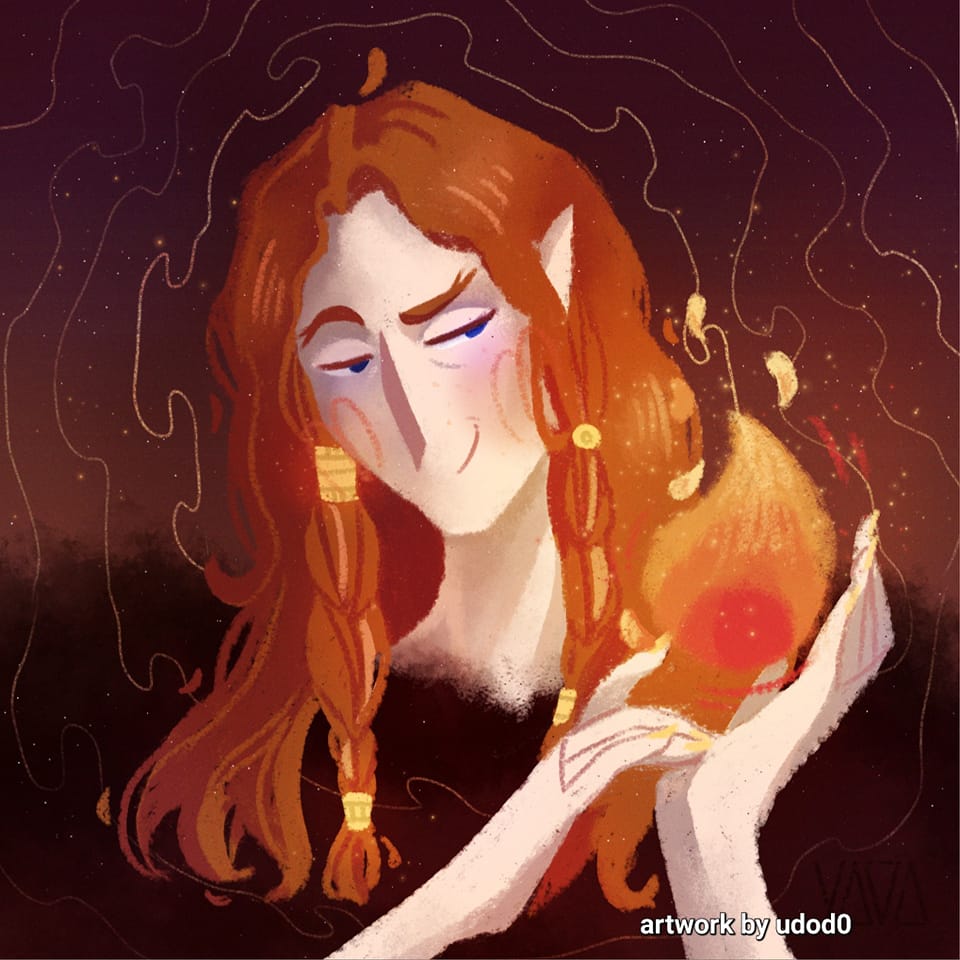
Artwork by udod0

Month for Loki: Three

This is such a big deal.

Lokeans and other Rokkatru devotees have been waiting and campaigning for the Troth to change their stance regarding the worship of the Jotnar for a long time.

I am so glad to see that it is actually happening – that things are moving forward, as the Troth issued a new position statement recently: 

Hail Fenrir: Celebrating the Troth’s New Position Statement

Hail Fenrir!

Month for Loki: Two


Loki has shown up several times in my life, and most often, it has been whenever I was struggling….

And this particular song resonates with me when I think about those times wherein I was struggling with my mental health:

“Jumper” lyrics

I wish you would step back from that ledge, my friend
You could cut ties with all the lies that you’ve been living in
And if you do not want to see me again
I would understand, I would understand

The angry boy, a bit too insane
Icing over a secret pain
You know you don’t belong
You’re the first to fight, you’re way too loud
You’re the flash of light on a burial shroud
I know something’s wrong

Well, everyone I know has got a reason
To say, “Put the past away”

I wish you would step back from that ledge, my friend
You could cut ties with all the lies that you’ve been living in
And if you do not want to see me again
I would understand, I would understand

Well he’s on the table and he’s gone to code
And I do not think anyone knows
What they are doing here
And your friends have left you, you’ve been dismissed
I never thought it would come to this
And I, I want you to know

Everyone’s got to face down the demons
Maybe today, you could put the past away

I wish you would step back from that ledge, my friend
You could cut ties with all the lies that you’ve been living in
And if you do not want to see me again
I would understand, I would understand
I would understand

I would understand
I would understand
I would understand

Can you put the past away?
I wish you would step back from that ledge, my friend
I would understand
I wish you would step back from that ledge, my friend
I would understand
I wish you would step back from that ledge, my friend
And I would understand
I wish you would step back from that ledge, my friend
I would understand
I wish you would step back from that ledge, my friend
And I would understand.

– Stephen Jenkins, Third Eye Blind

MfL, Ten: Thank You for this day.

When I first moved south – nearing twenty years ago! – one of the first people I met was a wonderful woman named T. Her daughter was almost the same age as my son, and though that’s where our similarities ended, T was a great neighbor, who went out of her way to introduce me to others, and make me feel welcome in my new neighborhood.

But as I said, T and I didn’t have that much in common.

For one thing, T was a Christian; a devout Baptist to be exact…and well, as you may know, I most certainly am not — but it did not stop us from (mostly) getting along. And as you might imagine, in the interest of neighborliness, T did invite me to various church events.

And in the interest of friendliness in return, I went to many of those church events with her.

And, as a result, I was introduced to many aspects of this particular form of Christianity that I’d never experienced, and while I’d like to stress that T was well aware that I’d no intention of converting, I realized very quickly that T was like a lot of my neighbors: her social life/community did revolve around the church on a daily basis.

So that is what I’m thinking of today, how T introduced me to a particular daily prayer that she referred to as ‘a war room prayer’ – a form of prayer that she told me is rather familiar to many Baptists.

I find war room prayers fascinating.

So, would it surprise you that I would find myself reworking it?

And so:

“Loki, thank you for this day.

Thank you for the breath in my lungs, the flush in my skin, and the ground beneath my feet. 

I am grateful for Your gifts and Your challenges.

Thank you, sweetest friend, for Your love and wisdom that brings me comfort and strength in times of despair.

The Havamal says: ‘The unwise man lies awake at night and ponders everything over; when morning comes, he is weary in mind, and all is a burden for ever.’

In this, You remind me how I should not be anxious for tomorrow; for when morning comes, I would be as weary and anxious as ever.

 Beloved, come – quiet my heart and mind. Free me from the chains of doubt and anxiety.

Grant me a peaceful rest so that I may be refreshed in spirit for You tomorrow.

Thank You.”

~~~

Hail Loki! ❤

MfL, Seven: Tenacious

This poem seems very Loki-esque to me — especially when one considers Loki’s association with dandelions:

“Let them try to stop you

in every way they know;

Even if they poison you,

Cut you down,

Uproot you,

Burn you to ashes,

Bury you deep,

And pave over the place

where you lie;

The weeds of your tenacity

will sprout through the cracks

And bloom.”

— Bree NicGarran, “Dandelion Roots” May 2022
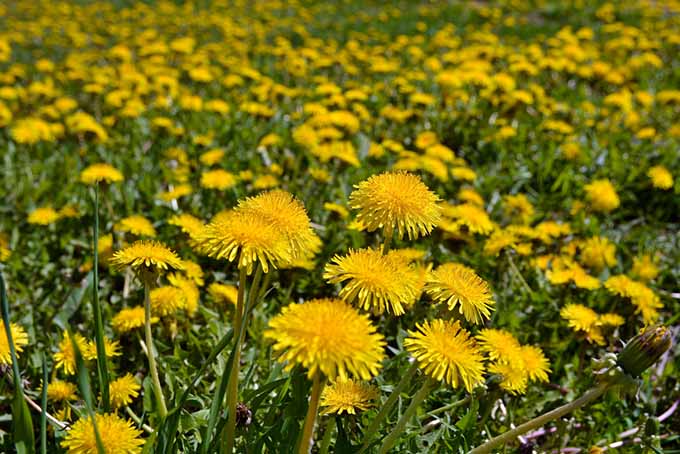
field of dandelions

MfL Six: Burning inside

Describe your God as something that occurs in nature.

*** UPG alert ***

Hail Loki!

#30 days

MfL, Three: Warning

They whisper lovingly words that sound like a warning. What do They say to you?

This { thing } might serve you now – but it will not serve you much longer.

#30 days