Even though I am over a month late in posting my thoughts, I could not wait to read National Geographic’s most recent article on the Vikings, which appeared in their March 2017 issue.
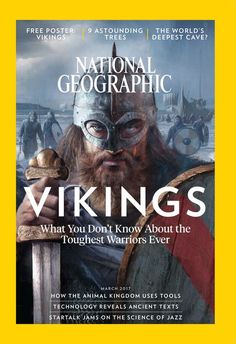
While much of the article concerned recent discoveries made about Viking culture of which I was already familiar, an intriguing theory concerning Ragnarok was mentioned on pages 38-9:
In the nearly three centuries before the raids on foreign shores began around AD 750, Scandinavia was wracked by turmoil, [Neil] Price [of Uppsala University, Sweden] says. More than three dozen petty kingdoms arose during this period, throwing up chains of hill forts and vying for power and territory. In the midst of these troubled times, catastrophe struck. A vast cloud of dust, likely blasted into the atmosphere by a combination of cataclysms – comets or meteorites smashing into the Earth, as well as the eruption of least one large volcano–darkened the sun beginning in AD 536, lowering summer temperatures in the Northern Hemisphere for the next 14 years. The extended cold and darkness brought death and ruin to Scandinavia, lying as it did along the northern edge of medieval agriculture. In Sweden’s Uppland region, for example, nearly 75 percent of villages were abandoned, as residents succumbed to starvation and fighting.
So dire was this disaster that it seems to have given birth to one of the darkest of all world myths –the Nordic legend of Ragnarok, the end of creation and the final battle, in which all gods, all supernatural beings, and all human beings and other living creatures die. Ragnarok was said to begin with Fimbulwinter, a deadly time when the sun turns black and the weather turns bitter and treacherous–events that eerily parallel the dust veil that began in 536, Price says.*
I had never considered that there could have been an actual historical event upon which Ragnarok was based.
Fascinating.
~~~~
- Vikings: What You Don’t Know About the Toughest Warriors Ever, by Heather Pringle, National Geographic, March 2017, pp 38-9)
 bloodteethandflame