I was talking to Him about conduits, and Hewas encouraging.
Then, suddenly…I heard V talking loudly.
So loudly, it woke me up.
I rolled over to look at V, and he had his eyes open.
He seemed wide awake, and he seemed to be looking right at me.
Then, V said to me:
“Just be me. Come… just be me.”
And that made no sense to me.
Then, V shut his eyes, and rolled over.
And even stranger – about 20 minutes later – V awakened, got out of the bed, and stumbled towards the toilet.
Evidently V had no memory of what he’d said.
~~~
I don’t know why we talk about these things.
Yes, I’m not certain as to how I feel about what He says about conduits.**
But I don’t like the part – the insinuation that I’m not sure if it’s an insinuation at all –that I *must* consider these things, even if I don’t talk about it.
~~~
Years ago, I wrote that people named Heather are always conceited in some way.
Heathers have a desire to be important.
And I think about what He’d said during a recent meditation, concerning the reasons for performing seidhr.
And He had this to say about a Heather I used to know – that is, L.O.L*:
Heather wanted recognition from the community.
Meanwhile, I just wanted a community of people to with whom to connect.
~~~
But after dream-interactions like this, I ask myself:
Do I want something more?
Do I want more than to be seen?
I feel shame over wanting recognition at all.
I feel selfish.
I ask myself why.
I just want a quiet community where I don’t have to talk about things with others unless I want to.
But I do know something about myself and that is …
To check myself, I often feel the need to share my experiences:
In case you did not know – a few weeks ago, my family got a new dog: a Dalmatian puppy.
We named him Phineas.
He has beautiful blue eyes, doesn’t he?
He is incredibly sweet-tempered and probably the calmest Dalmatian we’ve ever owned (and V and I have had 5 other Dals over the last 25 years)
And yet, what’s new for us is that it turns out that Phineas is 100% deaf.
While deafness in Dalmatians is a rather common occurrence – something like 30% of Dals have some level of hearing loss/deafness – we have never had a deaf Dal ourselves.
So, as you might imagine, I have been doing research on how to train a deaf dog.
We’ve begun to learn sign language. We’ve invested in a vibrating collar.
And my latest goal has been to find a local dog training program/facility that can assist us in training our wonderfully calm, incredibly intelligent puppy – who just happens to be deaf.
While it would seem that there are plenty of trainers and facilities that offer specialized training for deaf dogs in California or Louisiana, there seems to be a dearth of actual trainers/facilities offering basic obedience training that encompasses deaf dogs in Central Florida.
Well, after many calls and emails and running around, I was excited to have finally heard back from a *local* training facility this morning.
So while V was checking through the website this evening
-and reading the customer reviews –
he found this review at the top of the list:
Tabitha ******* ***** —5 star I wanted to wait until our dogs settled in before giving my review….
Before we took Loki and Odin to [name of dog training facility], they were showing aggressive behaviors towards other animals, especially dogs, they were awful on leashes, and when someone came over they were jumping all over them.
They boarded and trained for three weeks… While at boarding Loki took to other dogs very well, he loves playing in a pack of dogs… Odin is now tolerant of dogs-he does great one-on-one but doesn’t care for a group of dogs. . They have some more work to do … but are so much better than they were. [W]hen I come in the door they are calmly waiting in their “place” until I call them out, and they don’t jump when they get to me.
I am so glad we took them to [training facility], it’s the best decision we could have made. Thank you so much for taking the time to work with [Loki and Odin]!
~~~
I just had to laugh…
Especially at the description of Loki and Odin being awful on leashes or jumping all over people who visit them.
I was also amused at the description of their personalities-
how Loki is sociable
but
Odin is only now tolerant of others, and does better one-on-one
LOL
Though I could have told Tabitha that working with Loki and Odin requires a lot of patience
…but it’s always worthtaking the time to work with Loki and Odin.
And mind you, I consider myself an aficionado of terrifying stories.
Whether they be urban legends, classic literature, folk tales, modern horror fiction, or creepypasta… I’ve often said that there is nothing better than a good suspense story.
I thrill at reading anything I can get my hands on that could give me a good scare – and I especially love the weeks leading up to Halloween/Samhain for this exact reason.
But about a week or so ago, I came across this story through The Line-Up, one of the many weekly email post-lists to which I’ve subscribed.
And ever since, especially whenever I’m out walking my dogs in the evening, my mind never fails to wander back to this haunting little tale – the 10th and final entry on this list – from blue_tidal:
The Smiling Man
About five years ago I lived downtown in a major city in the US. I’ve always been a night person, so I would often find myself bored after my roommate, who was decidedly not a night person, went to sleep. To pass the time, I used to go for long walks and spend the time thinking.
I spent four years like that, walking alone at night, and never once had a reason to feel afraid. I always used to joke with my roommate that even the drug dealers in the city were polite. But all of that changed in just a few minutes of one evening.
It was a Wednesday, somewhere between one and two in the morning, and I was walking near a police patrolled park quite a ways from my apartment. It was a quiet night, even for a week night, with very little traffic and almost no one on foot. The park, as it was most nights, was completely empty.
I turned down a short side street in order to loop back to my apartment when I first noticed him. At the far end of the street, on my side, was the silhouette of a man, dancing. It was a strange dance, similar to a waltz, but he finished each “box” with an odd forward stride. I guess you could say he was dance-walking, headed straight for me.
Deciding he was probably drunk, I stepped as close as I could to the road to give him the majority of the sidewalk to pass me by. The closer he got, the more I realized how gracefully he was moving. He was very tall and lanky, and wearing an old suit. He danced closer still, until I could make out his face. His eyes were open wide and wild, head tilted back slightly, looking off at the sky. His mouth was formed in a painfully wide cartoon of a smile. Between the eyes and the smile, I decided to cross the street before he danced any closer.
I took my eyes off of him to cross the empty street. As I reached the other side, I glanced back … and then stopped dead in my tracks. He had stopped dancing and was standing with one foot in the street, perfectly parallel to me. He was facing me but still looking skyward. Smile still wide on his lips.
I was completely and utterly unnerved by this. I started walking again, but kept my eyes on the man. He didn’t move.
Once I had put about half a block between us, I turned away from him for a moment to watch the sidewalk in front of me. The street and sidewalk ahead of me were completely empty. Still unnerved, I looked back to where he had been standing to find him gone. For the briefest of moments I felt relieved until I noticed him. He had crossed the street, and was now slightly crouched down. I couldn’t tell for sure due to the distance and the shadows, but I was certain he was facing me. I had looked away from him for no more than 10 seconds, so it was clear that he had moved fast.
I was so shocked that I stood there for some time, staring at him. And then he started moving toward me again. He took giant, exaggerated tip toed steps, as if he were a cartoon character sneaking up on someone. Except he was moving very, very quickly.
I’d like to say at this point I ran away or pulled out my pepper spray or my cellphone or anything at all, but I didn’t. I just stood there, completely frozen as the smiling man crept toward me.
And then he stopped again, about a car length away from me. Still smiling his smile, still looking to the sky.
When I finally found my voice, I blurted out the first thing that came to mind. What I meant to ask was, “What the fuck do you want?!” in an angry, commanding tone. What came out was a whimper, “What the fuu … ?”
Regardless of whether or not humans can smell fear, they can certainly hear it. I heard it in my own voice, and that only made me more afraid. But he didn’t react to it at all. He just stood there, smiling.
And then, after what felt like forever, he turned around, very slowly, and started dance-walking away. Just like that. Not wanting to turn my back to him again, I just watched him go, until he was far enough away to almost be out of sight. And then I realized something. He wasn’t moving away anymore, nor was he dancing. I watched in horror as the distant shape of him grew larger and larger. He was coming back my way. And this time he was running.
I ran too.
I ran until I was off of the side road and back onto a better lit road with sparse traffic. Looking behind me then, he was nowhere to be found. The rest of the way home, I kept glancing over my shoulder, always expecting to see his stupid smile, but he was never there.
I lived in that city for six months after that night, and I never went out for another walk. There was something about his face that always haunted me. He didn’t look drunk, he didn’t look high. He looked completely and utterly insane. And that’s a very, very scary thing to see.*
Perhaps I felt haunted by this, as I have the same habit as blue_tidal: I’ve long been known for my habit of going for long walks at night – whether out of boredom or sheer restlessness – and despite the enduring nature of this quirk of mine, I’d completely lost my desire to go out walking alone after dark.
~~~~
* However, after sharing this piece with a close friend of mine, she asked if it would help any if I reframed my fear by thinking of the Smiling Man as Loki.
I had to laugh.
Hence that is where the Mindfuck portion of this post’s title comes from – because I can definitely see Loki as having an aspect to Him wherein He might mess with someone’s head in a hauntingly similar and relentless manner.
On Saturday night, my family and I attended a lovely wedding held on a beach in St. Petersberg, FL.
We arrived a bit early, so to pass the time before the ceremony began, we looked for shells on the beach.
Almost immediately, my husband V found this shell, and thought to save it for me, as he pointed out that there was a rune on it.
At first glance, V saw Sowilo.
When my son K looked at it, he thought it was closer to Kenaz.
Meanwhile I saw Othala.
I thought that Othala was rather fitting, as we were attending a wedding, and Othala strikes me as a rune of family and heritage, of community and ancestral/spiritual wealth.
I thought it appropriate since a wedding is a family event, that involves communion between two families, wherein often guests (of perhaps several generations) gather to celebrate. (We briefly considered giving the shell to the couple and explaining its delightful appropriateness in regards to us finding it on the day of their wedding, but then I recalled that the couple were rather devout Christians who may not have appreciated runes as being significant -let alone a spiritual/ancestral blessing – upon their union.)
It was a pleasant and surprising thing, and upon arriving home, I posted a picture of the shell, asking others what rune they saw.
While most agreed with me that it definitely looked like Othala, one friend mentioned that she’d initially seen Gebo a moment before she noticed that it was Othala. When I told her about the circumstances in which the shell was found, she agreed even more so that the seashell was a sign of blessing of the ancestors upon the wedding — and truly a gift from the sea. ❤
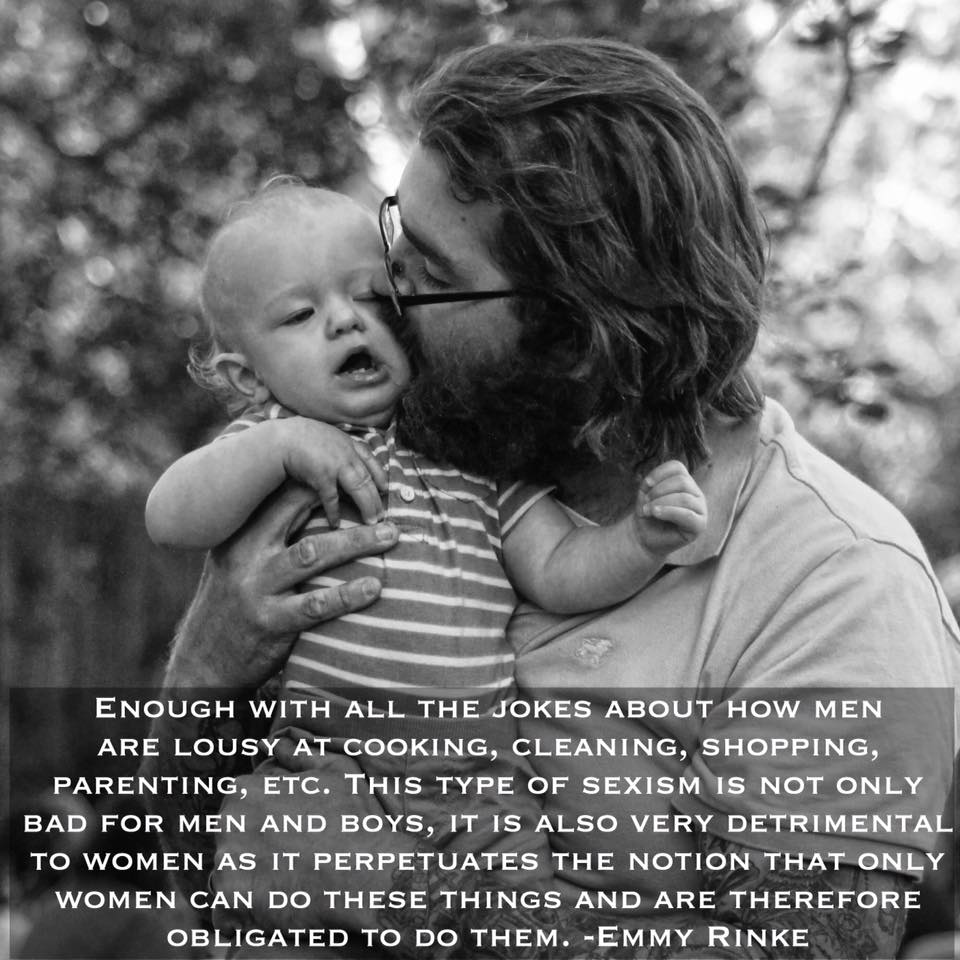
And yet, she doesn’t see how this belief that she holds about men’s ‘inherent incompetence’ could be seen as an unhealthy, if not disrespectful belief about men.
This is not to say that I have never found myself engaging in thoughts and behavior that play into traditional marital stereotypes – hell, I’m living what is essentially a marital stereotype – but I felt a bit dismayed to consider that she believed that her husband needed her in ways that she didn’t need him, and that, she believed, was the essence that made their relationship such a healthy, stable marriage.
Her husband was emotionally dependent on her, she said, and that was the secret to their happy marriage. She wants him in her life, but he needs her in his, and she prefers him that way. Dependent. Terrified to be without her. Checking in constantly to make sure that he’d done something right.
And then to encourage her daughter to seek such a man for a husband.
I find that a bit disturbing.
I wondered if she’d ever considered that feminism might be a belief that both genders deserve respectful treatment. That we – as a society of human beings – need to recognize that there are imbalances in the current society that are reinforced by attitudes regarding gender, and that both genders will benefit from any changes made to those attitudes. That a change in society begins with a change in attitude. Change the attitude, change the belief, change the world.
But her attitude – that men are essentially helpless or hopeless – is exactly the sort of limiting attitude that, if turned about, would likely be deemed misogyny.
Meanwhile, I found her encouragement to her daughter to find a ‘needy’ man disturbing in that the very qualities that she valued in her ‘happy marriage’ could also be applied to a dysfunctional, if not emotionally abusive marriage.
Misandry. It’s a thing.
Perhaps this bothers me so much because I am the mother of two sons.
Or even more so, I am fighting against my own upbringing and my own issues with being emotionally abused that I cannot stomach someone glorifying such unhealthy qualities in a marriage as ‘happy’, when if the roles were reversed, those same ‘feminist’ friends of hers would be moving heaven and earth to convince her to get the fsck out.
During this past month, I have been slowly making my way through Playing with Fire: An Exploration of Loki Laufeyjarson, by Dagulf Loptson.
I am heartened to find corroboration in my belief that one of Loki’s major aspects is as a God of Fire. Now while Loptson connects Loki with specific forms of fire – as both the funeral pyre as well as metaphorical fire of illumination/knowledge – I am delighted to see someone else confirm so many of the personal connections that I have made in my own practices.*
Though I know of several more reconstructionist Lokeans whom I have argued with, who hasten to point out that the connection of Loki with fire is nothing more than a case of mistaken identity – as there is that one instance wherein Loki is loosely conflated with Logi (to whom Loki lost to in that eating contest in Sturluson’s Eddas) and how supposedly, the only other incidental but still mistaken connection was popularized in Richard Wagner’s four part opera, often referred to as The Ring Cycle (Der Ring des Nibelungen).
But, in light of my own experiences, I have always disagreed with the assertion that Loki as a God of Fire is based merely upon accidental conflation that led to mistaken identity.
So three cheers for Peer Corroborated Personal Gnosis, indeed 🙂
~~~
But arguments notwithstanding, I’ve always equated Loki with fire, as He has often written me a burning love letter through pandoramancy
*As well I cannot express enough how exciting it is to gain new knowledge for my path, as Loptson has threaded so many correlations between Loki and Agni, the Rigvedic deity of fire, divine knowledge, and conveyor of sacrifice to the Gods.
There was something about Tyler Joseph’s sing-song delivery of the lyrics that just annoyed the heck out of me.
And yet, almost from the day that I first heard this song, it would *not* get out of my head.
It became a really insistent earworm, nearly on par in annoyance factor with ‘It’s a Small World.’
Then, a dear friend of mine reminded me of the possibility that it could be another example of pandoramancy.*
So, I did what I always do when I come across an incidence of pandoramancy?
I concentrated on listening to the lyrics the next time the song randomly came up.
I thought about what sort of emotions, thoughts and associations came immediately to mind while listening. And since I am a person who is rather particular about words, I Googled the lyrics, so I could familiarize myself better with the lyrics as well.
But it all seemed to no avail, since the lyrics seemed, at first, surprisingly much simpler than I ever would have expected, and yet, the main thing seemed to be how annoyingly repetitive they were:
All my friends are heathens, take it slow Wait for them to ask you who you know Please don’t make any sudden moves You don’t know the half of the abuse All my friends are heathens, take it slow Wait for them to ask you who you know Please don’t make any sudden moves You don’t know the half of the abuse
Welcome to the room of people Who have rooms of people that they loved one day Docked away Just because we check the guns at the door Doesn’t mean our brains will change from hand grenades You’re lovin’ on the psychopath sitting next to you You’re lovin’ on the murderer sitting next to you You’ll think, how’d I get here, sitting next to you? But after all I’ve said, please don’t forget
All my friends are heathens, take it slow Wait for them to ask you who you know Please don’t make any sudden moves You don’t know the half of the abuse
We don’t deal with outsiders very well They say newcomers have a certain smell Yeah, I trust issues, not to mention They say they can smell your intentions You’re lovin’ on the freakshow sitting next to you You’ll have some weird people sitting next to you You’ll think “how did I get here, sitting next to you?” But after all I’ve said, please don’t forget (Watch it, watch it)
(Watch it) All my friends are heathens, take it slow Wait for them to ask you who you know Please don’t make any sudden moves You don’t know the half of the abuse
All my friends are heathens, take it slow (Watch it) Wait for them to ask you who you know (Watch it) All my friends are heathens, take it slow (Watch it) Wait for them to ask you who you know
Why’d you come, you knew you should have stayed I tried to warn you just to stay away And now they’re outside ready to bust It looks like you might be one of us
Okay. The first thing that struck me (aside of the 4 (!) repetitions of that rather long chorus) was the repetitive use of the words they and them and the phrases sittin next to you, watch it, and after all I’ve said please don’t forget.
So I immediately grasped the overall message that whoever they are, they are different than you or me.
They are – let’s see –
Psychopaths.
Murderers.
Weird people.
Freakshows.
So the song definitely seems to be a warning.
And there They are sitting next to you (the listener), and yet you don’t know how these dangerous people suddenly got to be sitting next to you.
Maybe you might love them for their differences ( as in loving on[the psychopath/murderer/freakshow] sitting next to you) but still fear them on some level….because you must watch it.
Because there are possibly valid reasons.
The singer goes on to explain that perhaps you should be nervous, because it’s been established that they are not only dangerous, but abused and distrustful of those who aren’t like themselves. They are easily triggered (take it slow/ don’t make any sudden moves) aggressive (brains will change from hand grenades ), paranoid (Wait until they ask you who you know), and perhaps are prone to display distinctly animal traits of perceiving the intangible (newcomers have a certain smell and they can smell your intentions).
But, surprisingly, by the end of the song, there’s quite a strange twist.
Suddenly not only has the singer identified himself as being one of them (We don’t deal with outsiders very well and Yeah, I have trust issues, not to mention) and he is warning you Why’d you come, you knew you should have stayed
I tried to warn you just to stay away
But you didn’t listen, so…
And now they’re outside ready to bust
Perhaps it is because It looks like you might be one of us
Damn.
So perhaps this is not just a song about the difference between criminals and law-abiding citizens, or even humans versus non-humans but more about how appearances deceive and behavior might not be so telling after all.
Perhaps you never know who is different, who actually is the monster.
Hell, it might even be …you.
Perhaps we are all monsters…it’s just a matter of perception.
And I can attest to their devotion, as I had the pleasure of seeing Twenty One Pilots perform at The Big Ticket in the autumn of last year.
Between the incessant high-pitched prolonged screaming of the pockets of barely post-pubescent females in the crowd, I also noticed that most every fan knew all the lyrics of nearly every song and it would seem that almost every single one of those fans sang those lyrics at the top of their lungs throughout the entire show. You could really tell who was a fan and who was not, to put it mildly.
~~~~
*Pandoramancy is when a random song seems to be not so random after a while. A song which is not just an earworm, but a song that suddenly engenders a reaction in the listener that is oddly dramatic or meaningful through either sudden association or several random yet repeated coincidences. As well, though an incidence of pandoramancy might only occur once, upon listening, there seems to be an over-reaching personal message for the listener inherent in the lyrics, based upon specific situational associations.
Pandoramancy can also refer to a form of divination that uses a playlist (containing a wide variety of music) and music storage software system (such as Pandora or Spotify). This divination operates wherein the querent will direct a question towards the Gods, and the querent then sets the playlist on shuffle, and the next song that comes up on the playlist is the answer.)